
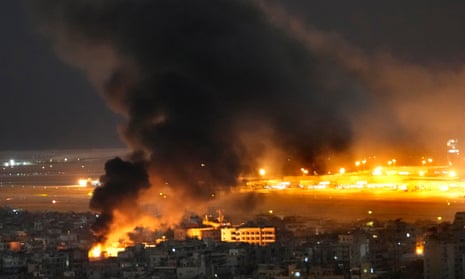
"Reasons Behind Israel's Strikes on Hezbollah-Linked Islamic Financial Institution Al-Qard al-Hassan"
Israel’s recent attacks on the Hezbollah-linked Islamic finance institution, Al-Qard al-Hassan, have sparked significant attention in the Middle East and internationally. Al-Qard al-Hassan, a financial cooperative based in Lebanon, is widely recognized as a key financial arm of Hezbollah, the powerful Shiite militant and political organization. While Hezbollah presents the organization as a charitable entity providing much-needed financial services to Lebanon’s impoverished population, Israel and other Western governments view it as a front for money laundering, financing terrorism, and other illicit activities. Israel’s strikes against this institution reflect the ongoing broader conflict between Israel and Hezbollah, with deep political, military, and economic implications.
Al-Qard al-Hassan was established in the 1980s during Lebanon’s civil war, originally created to offer interest-free loans to impoverished Shiite communities. Over the years, it expanded its operations and became deeply embedded in Lebanon’s social fabric, gaining wide support from Hezbollah’s followers. Despite its charitable beginnings, Israel argues that the institution plays a critical role in Hezbollah’s military operations, funding the group's armed activities through a network of global donors and financial channels. As tensions escalate between Israel and Hezbollah, particularly along the Israeli-Lebanese border, Israeli officials see Al-Qard al-Hassan as a legitimate military target.
The attacks on this financial institution can be seen as part of Israel’s broader strategy of “economic warfare” against Hezbollah. By targeting Hezbollah’s financial infrastructure, Israel aims to weaken the group’s operational capabilities without resorting to a full-scale military confrontation. Al-Qard al-Hassan’s financial network is crucial for Hezbollah’s ability to pay its fighters, purchase weapons, and maintain its military and political influence in Lebanon. Israel believes that by crippling Hezbollah’s access to funding, it can limit the group’s capacity to launch attacks or sustain prolonged military campaigns.
The significance of Al-Qard al-Hassan goes beyond simple financing, as it has become a symbol of Hezbollah’s socio-political power in Lebanon. It not only provides financial services to tens of thousands of Lebanese citizens but also functions as a tool for Hezbollah to gain loyalty and support from the population. The institution fills a gap left by Lebanon’s collapsing financial system, offering services that the state and private banks fail to provide amid the country’s severe economic crisis. Therefore, Israel’s strikes on this institution also have broader implications for Lebanese society, potentially exacerbating the hardships faced by many citizens who rely on its services.
From Israel’s perspective, Hezbollah’s growing power in Lebanon poses a direct threat to its national security. Hezbollah has built a sophisticated military infrastructure in southern Lebanon, with a vast arsenal of rockets capable of reaching deep into Israeli territory. By attacking Hezbollah’s financial lifelines, Israel aims to prevent the group from acquiring more advanced weaponry and maintaining its armed presence near the Israeli border. In this sense, Israel’s strikes against Al-Qard al-Hassan are part of a preventive strategy aimed at neutralizing future threats before they can materialize into active hostilities.
However, these attacks risk inflaming an already volatile situation. Hezbollah has vowed retaliation for any Israeli actions that target its assets or personnel. Israel’s strikes on Al-Qard al-Hassan could provoke a military response from Hezbollah, leading to further escalation in the region. The tit-for-tat dynamic between Israel and Hezbollah has led to several clashes over the years, with the potential for another devastating war always looming. The situation is particularly sensitive now, as the broader Middle East remains on edge due to conflicts in Gaza, Syria, and other areas.
Internationally, Israel’s attacks on Al-Qard al-Hassan have drawn mixed reactions. The United States, which classifies Hezbollah as a terrorist organization, has expressed support for Israel’s actions, framing them as part of the global fight against terrorism financing. However, critics argue that Israel’s attacks on civilian financial institutions, even those linked to Hezbollah, could further destabilize Lebanon, a country already on the brink of economic collapse. The strikes could also fuel anti-Israel sentiment across the Arab world, where Hezbollah is seen by many as a legitimate resistance group rather than a terrorist organization.
Lebanon’s government, meanwhile, has condemned the Israeli attacks, viewing them as a violation of Lebanon’s sovereignty. Hezbollah’s dominance in Lebanon complicates the government’s ability to act independently, as the group holds significant political power. The attacks on Al-Qard al-Hassan put the Lebanese government in a difficult position, as it must balance maintaining relations with the international community, particularly Western nations, while also avoiding direct confrontation with Hezbollah, which could lead to internal unrest.
For Hezbollah, the Israeli strikes represent yet another attempt to undermine its influence in Lebanon and the broader region. Over the years, Hezbollah has survived multiple Israeli military campaigns and economic sanctions, relying on its deep support base and financial networks to rebuild and continue its activities. Al-Qard al-Hassan plays a vital role in this resilience, making Israel’s attacks on the institution a direct threat to Hezbollah’s long-term sustainability. How Hezbollah responds to these attacks will be crucial in shaping the next phase of the Israel-Hezbollah conflict.
Ultimately, Israel’s decision to attack Al-Qard al-Hassan highlights the intertwined nature of military, political, and economic conflicts in the Middle East. The ongoing struggle between Israel and Hezbollah is not confined to the battlefield; it extends into the financial realm, where both sides seek to weaken each other’s capacity to wage war. By targeting Hezbollah’s financial infrastructure, Israel aims to diminish the group’s influence both militarily and socially. However, the risks of escalation and further destabilization remain high, as the situation in Lebanon continues to deteriorate amid internal political chaos and external pressures.

0 Comments